


1982: Diary of a Wood part 2 - the Holly and the Ivy
Mid Sussex Times January 22 1982
January
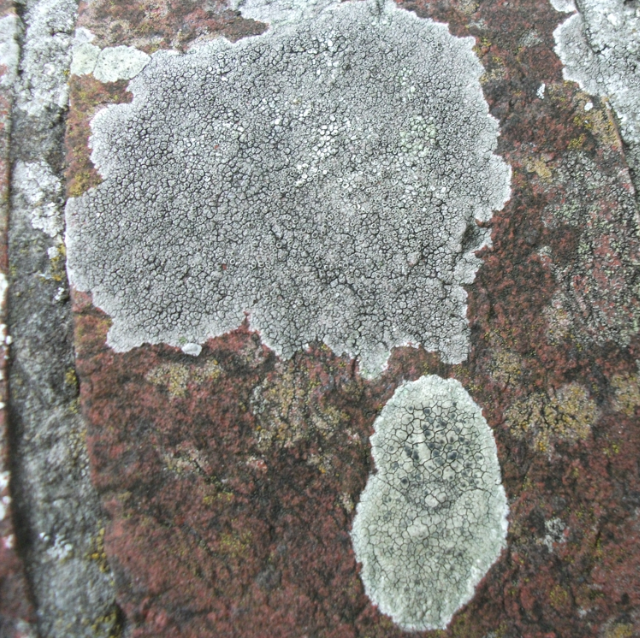
The day was dry and sunny, but a cold wind blew as I paused at the entrance to the Worsley Memorial recreation ground to examine the crustose lichens on the wall which included Lecanora Calcarea, Caloplaca Decipiens

and possibly Ramalina Subfarinacea, I crossed to the footpath, and at the gateway examined the holly trees, Helix Aquifolium.
Whilst all bear flowers, it is only on the female trees that red berries develop. Holly leaves are thick and waxy to resist water loss. It is always fascinating to observe that the leaves lower down on the trees are protected by tough sharp spines. A deterrent for animals who see it in the winter as the only broad leaved tree with green nourishing foliage and would soon strip the lower branches but for this protection.

Higher up and out of reach, the leaves are smooth edged and spineless. Many of the leaves are galled by the holly leaf miner, fitter might have a lick it. The larva feeds on the chlorophyllous cells immediately underneath the upper epidermis.

The uninjured cells below divide and form tubular masses which grow into the cavity of the mine. The pressure causes the epidermis to become bladder-like. It is not uncommon to see triangular incisions, these being made by a ‘tit’ picking out the lava. Another stage of the food chain.
Ivy, Hedera helix, which was present, also has smooth waxy leaves and two types of leaves. The familiar lobed leaves of the young growth ascend until they attain a reasonable height when they lose their lobes, because become quite smooth edged and adult, resulting in flowering and subsequent fruiting. They reverse the normal seasonal growth in that they bear flowers from late autumn and berry in the spring.

It is a pity that in New England Wood a number of the thick woody stems of ivy have been severed at the bottom. Ivy is not a parasite, it only uses the tree for support. Maybe, like other plants, the lobes deprive the host tree of water and soil nutrients, but there is always competition in a wood and it is considered trivial in this instance, but strangulation is a fallacy also.
A tree breathes through lenticels in the bark and ivy may restrict this, that is all; there could come a time, however, when its growth is so great that its sheer weight could bring down the whole host tree, but it is normally relative to the growth of the tree.
Mnium Hornum, one of the commonest of woodland mosses, was prevalent among rotting wood and at tree bases. Male and female parts are on separate plants, the males being clustered into rosette like structures whilst females form hanging fruiting capsules on long red stalks in spring.

The fern moss Thuidium Tamariscinum– is always attractive, with its bright green or golden feathery stems forming thick mats or tufts, and grows in similar situations as was apparent today.

Woodlands have a climate of their own. In the summer, when the trees are fully closed, they are shady and cool. In the winter, they are less prone to frost and offer a considerable amount of shelter from drying cold winds.
Most plants like plenty of light, but those in woodlands have to choose the price for shelter by becoming shade tolerant, like mosses and liverworts and a few summer flowering plants or they must have their flowers and fruit early in the year, before the tree canopy excludes the light. It was not, therefore, surprising to see the bluebells pushing their way through the leaf litter in this with this in view.
There are a number of rhododendron bushes in the wood. These were no doubt planted mainly to provide pheasant cover. Few insects live on them and, left controlled, their spreading nature and dense evergreen shade cause them, in the eyes of naturalist, to be a nuisance in a wood.
They are saved from absolute disgrace because flocks of small birds birds often find shelter in them on cold winter nights and woodcock sometimes lie beneath them during the day.
Grey squirrels are present. They can go for many days without food in the winter, since they put on so much fat during the autumn, when food is plentiful. This tides them over periods when it is not possible or desirable to find food.
They do spend long periods in their homes during the winter, but they still venture out in all but the most inclement weather. It was not, therefore, surprising to see them active today on such a glorious day. (to be continued)


Comments